
K-Tips vs. Sew-Ins — Which Extension Method Is More Protective?
The Best Extension Is the One That Works With Your Hair, Not Against It.
Two Beloved Methods, One Important Question
If you've been researching hair extensions, you've likely come across two of the most popular installation methods: k-tip extensions and sew-in weaves. Both are beautiful, both can be incredibly protective — but they are not the same, and one may be significantly better for your specific hair type, lifestyle, and goals. Let's break it down together so you can make an informed, confident decision.
What Are K-Tip Extensions?
K-tip extensions (also called keratin bond or fusion extensions) are individual hair strands pre-tipped with a keratin bond at the top. A stylist uses a heating tool to melt and fuse the bond to small sections of your natural hair. The result is a seamless, strand-by-strand application that moves freely and looks incredibly natural. There is no weft, no braid foundation — just individual strands blended with your own.
Because they are applied individually, k-tips distribute weight evenly across the scalp. When properly installed with appropriate tension, they are gentle on the hair and scalp. They do not require tight braiding, which eliminates the traction stress that can be associated with sew-in installs.
What Are Sew-In Weaves?
A sew-in weave (also called a braid and sew or simply a weave) involves braiding the natural hair into a flat, cornrowed foundation and then sewing wefts of hair onto those braids using a needle and thread. The natural hair is completely tucked beneath the wefts, creating a full protective style.
Sew-ins are fantastic for full coverage, adding serious volume and length, and protecting the natural hair by keeping it completely enclosed. They're also a versatile style — curly, straight, wavy, any look you want.
Protective Comparison: The Honest Truth
Both methods can be extremely protective or harmful depending on the skill of the installer, the quality of the hair, and how well the client maintains the style. That said, here are some key differences in their protective profiles:
K-tips: No tight braiding required, so there is less risk of traction alopecia along the hairline and scalp. Each bond is individually applied, allowing the scalp to breathe fully and the natural hair to receive moisture and care throughout the install period.
Sew-ins: The braid foundation must be done with the correct tension and pattern. Too tight, and you risk serious damage to the hairline and edges. Done correctly with a proper pattern, the hair underneath is fully protected from manipulation, heat, and breakage.
K-tips are generally better for women with finer or more fragile hair who need a lighter-weight, low-tension option.
Sew-ins are often better for women wanting full coverage, a dramatic transformation, or those with medium to thick hair that handles the braid foundation well.
Our Recommendation
There is no one-size-fits-all answer. The most protective extension is the one installed by a skilled, knowledgeable stylist using quality hair — and that is exactly what you'll find at Holistic Crowns. We take the time to assess your natural hair, your lifestyle, and your goals before recommending an installation method. Because your hair deserves a plan, not just a service.
✨ Book a consultation with us and let's find the perfect protective strategy for your unique crown.

Uplifting Stories — How Hair Extensions Transform Confidence & Protect Your Natural Hair
Real Women. Real Results. Real Growth.
More Than Meets the Eye
When most people think of hair extensions, they think about length and volume. But for so many of the women we serve here at Holistic Crowns, extensions are about so much more than aesthetics. They are tools of transformation — protecting fragile hair during vulnerable seasons of life, giving women a break from daily manipulation, and restoring confidence that may have quietly slipped away.
We want to share a few stories that remind us why we do what we do. These are the kinds of stories that make us tear up in the salon chair. These are your stories. Names are shortened for privacy. These are real stories.
Ms. M’s Story: Finding Herself Again After Hair Loss
Ms. M came to us after experiencing significant hair thinning following the birth of her second child. Postpartum hair loss had left her feeling like a stranger in her own body. She had stopped wearing her hair down. She avoided mirrors. She cried in parking lots before walking into work because she didn't feel like herself anymore.
We installed a set of k-tip extensions, carefully matched to her natural texture and color, leaving her delicate perimeter completely untouched. Within her first week, Ms. M texted us a selfie with the caption: 'I forgot what it felt like to feel beautiful. Thank you for giving that back to me.'Over the next year, as Ms.M wore her extensions and kept up with her hair care routine, her natural hair grew back fuller and stronger — protected, nourished, and given the rest it desperately needed.
Destiny's Story: Growing Four Inches in Six Months
Destiny had struggled with hair breakage her whole life. She had tried every product on the market, but her hair seemed to stay the same length no matter what she did. It wasn't until she got 2 sew-in back to back, scalp care with a proper braid pattern and high-quality raw hair that things changed.
Her hair was fully protected underneath, no heat, no daily styling stress, no breakage. She followed the maintenance routine we gave her and six months later. When we took her hair down, she had grown four inches of healthy new length — more than she had ever experienced. Destiny cried. We cried. It was a good day.
Stacey’s Story: Returning to Work with Her Head Held High
Stacy had been dealing with alopecia for three years and had slowly withdrawn from public life. She turned down promotions because they required more visibility. She skipped family photos. She was a vibrant, brilliant woman living smaller than she deserved.
After coming to Holistic Crowns and working with us on a customized extension plan that worked with her specific hair pattern, Stacey walked into her next job interview with a full, beautiful head of hair and the confidence to match. She got the promotion. She sent us flowers.
Your hair journey is personal — and we believe it should always move you forward, never hold you back. ✨
Why Extensions and Hair Growth Go Hand in Hand
One of the most beautiful things about quality hair extensions, when properly installed and maintained, is that they create the ideal environment for natural hair growth. When your hair is tucked away and protected from daily manipulation, heat, and environmental stressors, it has the opportunity to thrive. Extensions are not a shortcut — they are a strategy.
At Holistic Crowns, our goal is always to leave your natural hair in better condition than we found it. Thatis the Holistic Standard.
Why Your Braid Pattern for a Sew-In Is More Important Than You Think
The Foundation Determines Everything. Don't Skip This Step.
The Part Most Clients Never Think About
When most women think about getting a sew-in, they focus on the hair — the texture, the length, the color. Understandably. But the truth that experienced extension specialists know is this: the braid pattern is the foundation upon which your entire install is built. Get it wrong, and even the most beautiful hair in the world cannot save the style. Get it right, and everything — comfort, longevity, appearance, and the health of your natural hair — falls into place beautifully.
What Is a Braid Pattern?
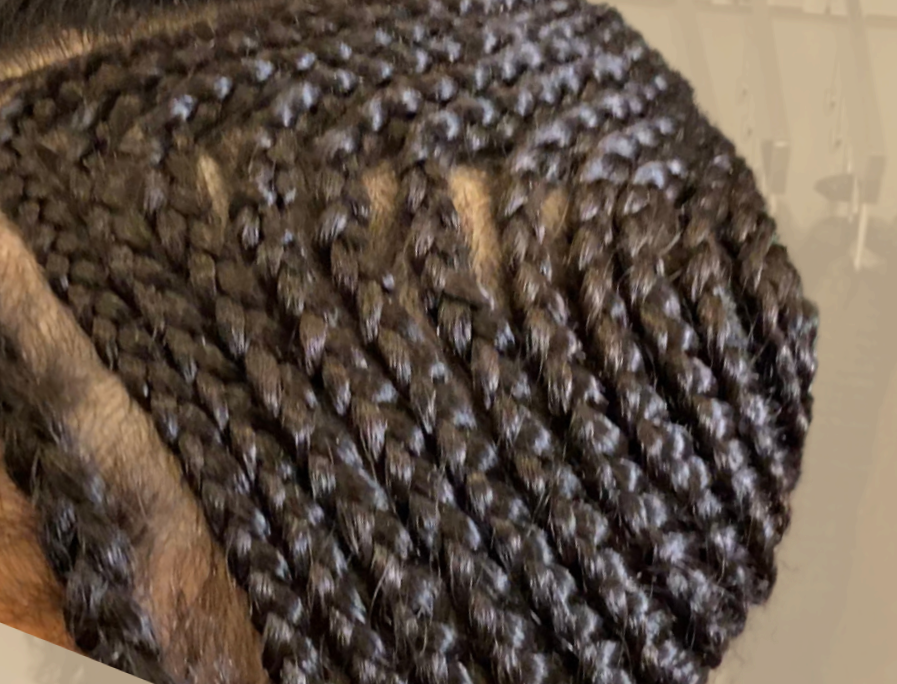
A braid pattern refers to the specific layout of the cornrows that serve as the base for your sew-in installation. These braids are not random — or they shouldn't be. A skilled stylist creates a braid pattern that is customized to the client's head shape, hair density, the desired style outcome, the type of hair being used, and the areas that need protection.
Think of the braid pattern as an architectural blueprint. The beautiful house (your hairstyle) is only as solid as the foundation beneath it.
How the Braid Pattern Affects Your Health
This is where things get really important. An incorrect or overly aggressive braid pattern is one of the leading causes of traction alopecia — a form of hair loss caused by sustained tension on the hair follicle. When braids are too tight, too close to the hairline, or laid in a pattern that puts too much stress on sensitive areas, the follicles are put under constant strain. Over time, this can cause permanent damage.
At Holistic Crowns, we never sacrifice the health of your natural hair for the sake of a style. This means:
We never braid too tightly. You should feel slight tension, but never pain, soreness, or headaches after a braid down.
We leave the perimeter of your hairline unbreaided or very loosely braided whenever possible. The edges and nape are the most vulnerable areas and deserve the most care.
We design the pattern to match the direction and weight distribution of the wefts, preventing the hair from pulling in unnatural directions.
How the Braid Pattern Affects Your Style
The braid pattern also directly determines what hairstyles you'll be able to wear and how natural they look. Here are a few examples:
A straight-back pattern works beautifully for straight styles but can make it difficult to part the hair in various directions. Perfect for a defined, sleek look.
A curved or vixen pattern (four separate quadrants) allows for high ponytails, multiple parting options, and versatile styling. Great for active women who love variety.A beehive or circular pattern is ideal for big, voluminous styles or full bundles with closures, allowing the wefts to lay naturally around a center part closure or frontal.
A leave-out pattern protects the bulk of the hair while leaving a small section out to blend over the wefts, creating an especially natural finish.
The Consultation Is Where the Magic Begins
Before we ever pick up a needle and thread, we sit down with you to understand your lifestyle, your styling preferences, and what you want your hair to be able to do during your install period. Do you work out? Do you love ponytails? Do you want to be able to part your hair anywhere? All of these answers shape the braid pattern we design specifically for you.
A proper braid pattern is not a detail. It is the difference between a sew-in that elevates your hair and one that damages it. We don't cut corners on your crown.
Why Are K-Tips So Expensive — And Are There More Affordable Alternatives?
Quality Is an Investment. But There's a Path For Every Budget.
Let's Talk Honestly About the Cost of K-Tips
We know the price of k-tip extensions can cause a pause — and we believe you deserve a completely transparent explanation of why they cost what they cost, and what your other options might look like if a full k-tip install isn't in the budget right now. At Holistic Crowns, we are not here to pressure you. We are here to inform you and find the best solution for your hair and your life.
Why K-Tips Cost What They Cost
A full k-tip installation is an investment for several layered reasons:
The hair itself: High-quality human hair — Remy, Virgin, or Raw — is expensive to source. It is ethically collected, carefully processed (or not, in the case of raw hair), and curated to meet specific texture and quality standards. The volume of hair used in a k-tip install (typically 100 to 200 grams for a full head) represents significant material cost.
The time investment: A full k-tip installation is a lengthy, detail-oriented process that can take four to eight hours or more. Your stylist is working strand by strand, carefully placing each bond in a way that is safe, natural-looking, and comfortable. You are paying for true craftsmanship.
K-tips need to be customized for each client. Customization includes but not limited to color blending, custom bond formation, and texture matching .
At times client needs their natural hair treated for smoothing and straitening. We offer a personalized approach based off clients need.
The skill and expertise: A skilled k-tip stylist has invested in training, tools (including professional keratin fusion tools), ongoing education, and years of hands-on experience. The quality of an install depends entirely on the person doing it.
The longevity: When installed and maintained properly, k-tips last three to six months. Spread that cost over the duration, and the per-week investment becomes much more reasonable.
Affordable Alternatives That Don't Compromise Quality
The good news is that you do not have to choose between healthy hair and your budget. At Holistic Crowns, we offer creative solutions that deliver beautiful results at a range of price points.
1. Minimal K-Tip Installs for Fullness or Length
A full k-tip install uses 100 to 200+ grams of hair. But if you're simply looking to add a bit more fullness, close a gap in density, or gain an inch or two of length in key areas, you may not need a full head at all. A strategic placement of 50 to 75 grams of k-tips — focused on the areas where you want the most impact — can create a beautiful, natural result at a fraction of the cost. This is one of our most popular options for clients who want a subtle enhancement.
2. Hybrid Installs: The Best of Both Worlds
A hybrid install combines two methods to maximize coverage and minimize cost. A common hybrid approach uses a small sew-in weft at the back or crown for volume and fullness, while k-tips are added around the perimeter for a seamless, natural-looking finish. This reduces the number of k-tip strands needed while still delivering a gorgeous, blended result — often at a meaningfully lower price point than a full k-tip head.3. Tape-In Extensions
Tape-in extensions are another excellent, more budget-friendly alternative. They use thin wefts of hair attached with medical-grade adhesive on either side of small sections of natural hair. They lay flat, they move naturally, and they can be re-taped and reused multiple times. They aren't right for every hair type, but for the right client, they're a beautiful and practical option.
Talk to us about your budget. We will always find a way to get you closer to your hair goals — no pressure, no judgment, just solutions. Book your consultation
Where Is Our Hair Sourced? The Holistic Crowns Commitment to Ethical, Quality Hair
We Know Where Every Bundle Comes From — And We're Proud to Tell You.
You Deserve to Know What You're Wearing
In an industry that can sometimes feel opaque and confusing, we believe transparency is everything. When you put hair on your head, you are trusting that it is safe, ethically sourced, and truly the quality you are paying for. At Holistic Crowns, we take that trust seriously. We want you to feel completely confident — not just in how your hair looks, but in where it came from.
Our Sourcing Regions: Southeast Asia's Hair Diversity
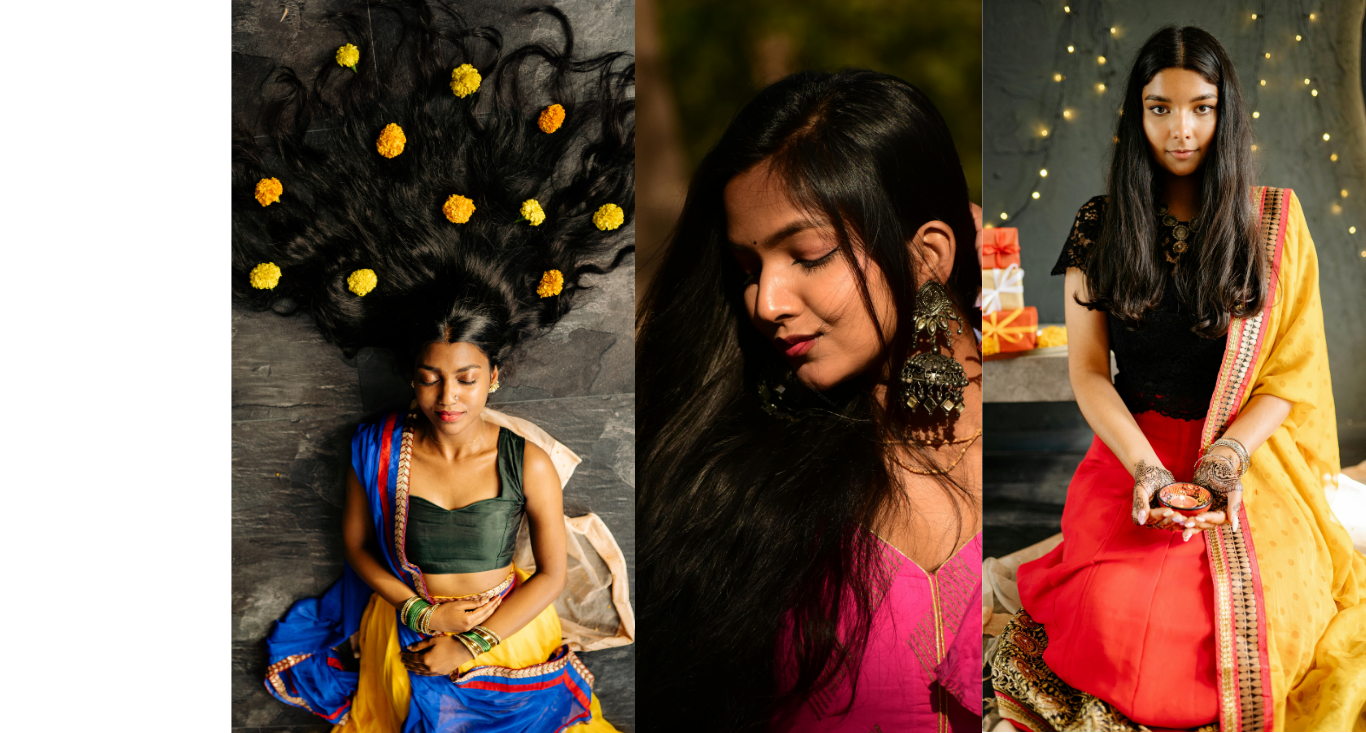
We source our hair exclusively from Southeast Asia and South Asia — specifically from India, Burma (Myanmar), and Cambodia. These regions are known worldwide for producing some of the highest quality human hair available, and each source brings its own unique characteristics to our collection.
India
Indian hair has been prized in the global extension industry for generations — and for good reason. Much of India's finest hair comes from temple donations, a deeply spiritual practice where devotees offer their hair as an act of devotion. This hair is collected with gratitude, sorted carefully by quality, and processed to meet the highest standards. Indian hair is known for its silkiness, density, and natural luster. It blends beautifully with a range of hair types and holds styles exceptionally well.
Burma (Myanmar)
Burmese hair is widely considered some of the strongest and most versatile raw hair in the world. Women in Burma have a long tradition of growing their hair very long with minimal chemical processing, which means the hair we source from this region often arrives in its most pristine, natural state. Burmese hair typically has a slight wave to it that makes it incredibly popular among our clients, and it is renowned for its durability and longevity. Hair from Burma is often advertised as a curly, low lustered texture, Although Burmese hair can at times have a beautiful curly ringlet pattern, it is not as common as the industry promotes. Often companies that are located outside the region, for example Vietnam, process the curls using steam or a chemical process, to mimic the Burmese curl pattern. Therefore, it is no longer raw or virgin. It can be considered processed raw hair. This does not mean “bad”, just procesed.
Cambodia
Cambodian hair is celebrated for its thickness and resilience. Like Burmese hair, it is often collected from women who have grown their hair long and naturally, with little to no chemical interference. Cambodian hair tends to have a naturally full body to it, making it an excellent choice for clients who want dramatic volume and long-lasting wear. Women with curly and kinky textures are great match because the Cambodian hair has a variety of unique curl patterns and the luster is low, meaning there is not an excessive amount shine, it also accepts color beautifully, making it a favorite for our clients who love a color refresh. True Cambodian hair can be more expensive because of high demand and low supply. One must make sure they are purchasing truly from Cambodia, there are a lot of imposters. Here at Holistic Crowns we ae supplied straight from the source.
Why Southeast Asian Hair?
The women of Southeast and South Asia share certain hair characteristics — a natural strength, a tendency toward darker pigmentation, and a resilience that comes from generations of minimal chemical processing — that make their hair exceptionally compatible with a wide range of client hair types, including many of our Black and mixed-heritage clients. The textures available from these regions allow us to find truly precise matches for straight, wavy, and even loosely curly natural hair types.
Our Ethical Commitment
We only work with suppliers who can verify that hair is collected consensually and that the women providing their hair are treated with respect and compensated fairly. Holistic Crowns has built relationships with vendors for over 18 years. The beauty of your extensions should never come at someone else's expense. Period.
From the women who grow it, to the hands that install it, to the crown you wear — every step should feel good. That's the Holistic Crowns promise. ✨
Remy, Virgin, and Raw Hair Extensions — What's the Difference and Which Is Right for You?
Not All Human Hair Is the Same — Here's Your Guide to Understanding Quality
Understanding the Hair Quality Spectrum
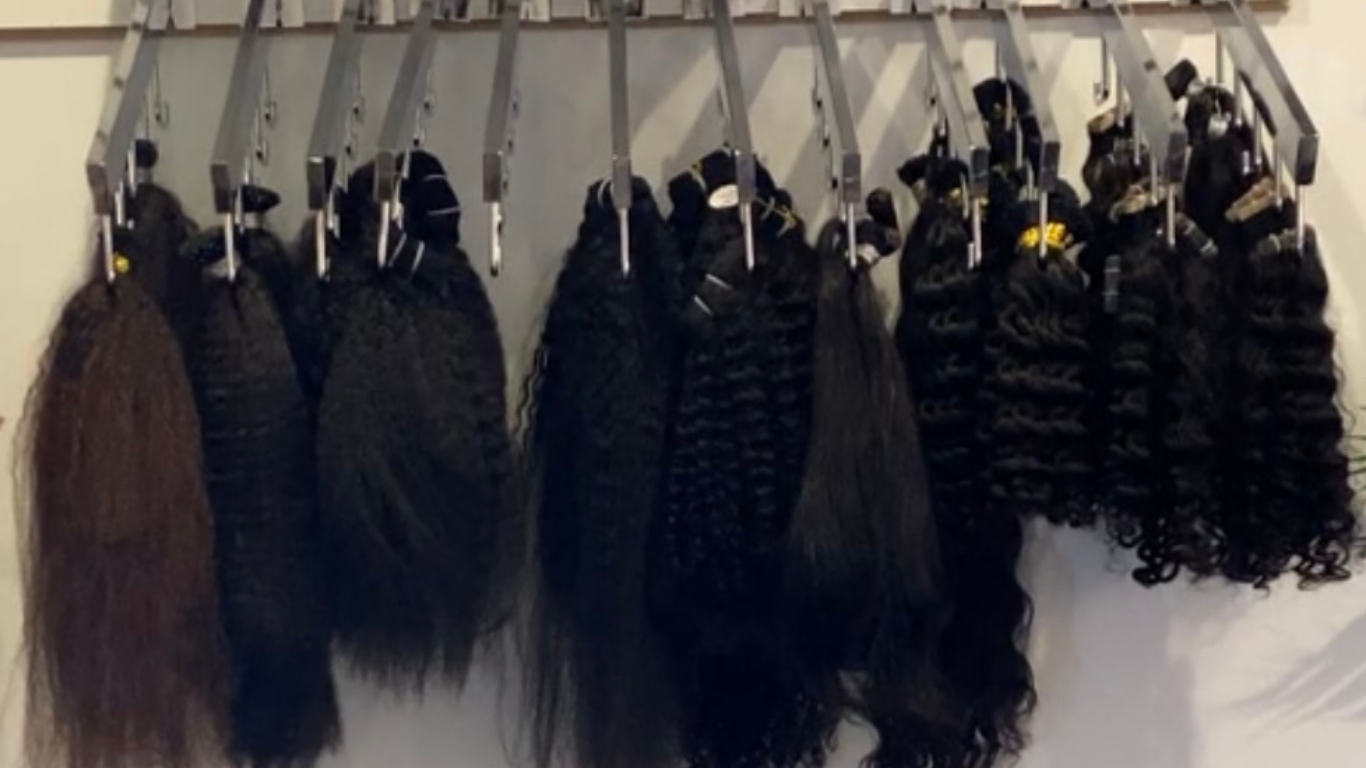
Walk into any beauty supply store or browse any extension website and you'll see terms like 'Remy,' 'Virgin,' and 'Raw' plastered everywhere — sometimes all three on the same package. The truth is, these terms are not interchangeable, and in many cases, they are used loosely or misleadingly by sellers who know customers haven't had anyone explain the real differences.
We're here to change that. Consider this your complete guide to understanding hair quality — so you can invest wisely, shop smartly, and truly understand what you're putting on your head.
Remy Hair: A Good Standard with a Wide Range
Remy hair refers to hair in which all of the cuticles — the tiny overlapping scales on each strand — are aligned in the same direction, from root to tip. This is important because misaligned cuticles cause tangling, matting, and a rough, dry texture that no amount of conditioner can truly fix.
Remy hair is real human hair, and it is a significant step above the processed, non-Remy hair commonly found in discount stores. However, 'Remy' does not tell you whether the hair has been chemically processed, bleached, dyed, or treated. Many Remy hair products on the market have been collected, processed, had the cuticles chemically stripped and then coated with silicone to mimic alignment. This hair can look beautiful in the store but shed, tangle, and deteriorate after a few washes once the silicone coating wears off. This is considered fallen hair.
That said, high-quality Remy hair from a reputable source can be a wonderful, more affordable option — particularly when clients are newer to extensions or on a tighter budget.
Virgin Hair: Chemically Untouched, Naturally Intact
Virgin hair is a step above standard Remy. In addition to having cuticles aligned in the same direction, virgin hair has never been chemically processed — no bleaching, no dyeing, no perming, no relaxing. It comes in its natural color and texture, exactly as it grew from the donor's head.
Because virgin hair has never been chemically altered, it is significantly stronger, more durable, and healthier than processed Remy hair. It accepts color beautifully — because the cuticle layer is intact and healthy — and it behaves more naturally in terms of how it responds to moisture, heat, and styling.
Virgin hair from our Southeast Asian source regions — India, Burma, and Cambodia — is among the highest quality available in the global market. These donors rarely use harsh chemical treatments, which means the hair we receive is in exceptionally pristine condition.Raw Hair: The Highest Standard in the Industry
Raw hair is the gold standard — and for many of our clients, it is the only hair they will ever go back to. Raw hair meets two essential criteria: it is completely unprocessed (meeting the virgin standard), AND it has been collected in smaller, more curated batches directly from a single donor or a small group of donors, without undergoing the industrial sorting and processing that larger-scale hair collections go through.
What does this mean practically? Raw hair retains its full, natural cuticle layer completely intact. It has never been soaked in acid baths, stripped, or coated. It moves exactly the way natural hair moves. It responds to humidity in a natural, consistent way. It can be colored, bleached, and styled repeatedly without the degradation you'd experience with processed hair. And it lasts — properly cared for raw hair can be worn, maintained, and reused for years.
Raw hair from Burma and Cambodia in particular is celebrated in the extension community for its incredible strength, natural wave patterns, and longevity. When you invest in raw hair, you are investing in something that will continue to perform and look beautiful for the long term.
Which Type Is Right for You?
Remy Hair: Great for clients who want a quality extension experience on a more accessible budget, or those who are newer to extensions and want to explore before committing to ahigher investment.
Virgin Hair: Ideal for clients who want premium quality, plan to wear extensions regularly, and may want to color or heat-style their extensions. The best balance of quality and value for regular extension wearers.
Raw Hair: The best choice for serious extension clients who want the most natural look and feel, the longest lifespan, and the ability to truly invest in a set of extensions that will grow with them. This is our recommendation for clients who are committed to their extension journey long-term.
✨ At Holistic Crowns, we carry all three quality tiers — because every woman deserves access to the information to make the right choice for her hair and her life. ✨
We are always here to answer your questions, walk you through the options, and help you find the perfect hair for your unique crown. Because that is what family does. To shop our hair extension visit www.holisticcrowns.com.

How to Maintain Your K-Tip Extensions at Home
Love Your Extensions and They Will Love Your Hair Back.
Your Extensions Are an Investment — Protect Them
Getting k-tip extensions is a significant investment — in quality hair, in a skilled stylist's time, and in your own confidence and wellbeing. The good news is that with the right at-home maintenance routine, your k-tips can last beautifully for three to six months, protect your natural hair throughout, and leave your natural hair in better condition when they come out than when they went in.
Consider this your Holistic Crowns guide to keeping your k-tips gorgeous, your bonds secure, and your natural hair thriving underneath it all.
Washing Your K-Tips
Wash in a downward motion only. Never scrub or rub in circular motions — this creates friction that can mat the hair around your bonds and cause tangling.
Use a sulfate-free shampoo. Sulfates break down the keratin bond over time. We recommend gentle, moisturizing formulas that clean without stripping.
Focus shampoo at the scalp. Work the product gently through the roots and allow it to rinse through the length without rubbing. The length only needs the rinse water passing over it.
Condition from mid-shaft to ends only. Keep conditioner and deep conditioning masks away from the bonds. Product buildup at the bond weakens the connection and can cause slippage.
Rinse thoroughly. Make sure no product residue remains near the bonds.
Drying Your K-Tips
Never sleep with wet or damp extensions. This is one of the fastest ways to cause matting, tangling, and even mold at the bond. Always dry fully before bed.
Use a blow dryer on a low to medium heat setting to dry thoroughly at the roots and around the bonds before air-drying the length, or blow dry the full length on a lower heat setting.
Gently squeeze (never rub) excess water from the length with a microfiber towel or a soft cotton t-shirt.
Daily Care and Brushing
Use a loop brush or an extension-safe paddle brush — never a standard bristle brush that can catch on the bonds.
Brush from the ends upward, working your way to the roots. Always hold the hair above where you're brushing to prevent tension on the bonds.
Brush gently in the morning, before bed, and after any physical activity. Do not allow hair to go long periods without being detangled.Apply a lightweight leave-in conditioner or extension serum to the mid-lengths and ends daily to keep hair hydrated and frizz-free.
Nighttime Routine
Braid your hair loosely or put it in a low bun or pineapple before sleeping. This prevents overnight tangling and friction.
Sleep on a satin or silk pillowcase, or wrap your hair in a silk scarf. Cotton creates friction that dries out extension hair and causes frizz and breakage.
Never go to sleep with product buildup in your hair. A light oil is fine — heavy creams or styling products should be washed out before your nighttime routine.
Styling and Heat
Always use a heat protectant before any heat styling. Human hair extensions do not regenerate their moisture — once damaged by heat, they cannot repair the way your natural hair attempts to.
Keep heat tools at or below 350°F to preserve the quality of the extension hair and the integrity of the bonds.
Avoid direct heat at the bonds themselves. Repeated high heat on the keratin bond can soften and loosen it.
Schedule Your Maintenance Appointments
No matter how well you care for your extensions at home, you will need professional maintenance every 4 to 6 weeks. Natural hair grows, and as it does, the bonds migrate away from the scalp. Maintenance appointments allow us to move bonds back up, remove any that may have loosened, check the condition of your natural hair underneath, and refresh the style. Skipping maintenance appointments is the single biggest factor in extension-related hair damage.
✨ Home care + professional maintenance = a beautiful, healthy extension journey. We're always here to guide you. ✨

The History of Women and Hair Extensions
It All Begins Here
From Ancient Rituals to Modern Crowns — Hair Has Always Been Power
A Crown That Has Always Been Sacred
Hair has never been just hair. Across every culture, every era, and every corner of the world, a woman's hair has been a symbol of identity, spirituality, status, and beauty. And for just as long as women have adorned their heads, they have found creative ways to enhance, protect, and celebrate their crowns. The story of hair extensions is not a modern invention — it is an ancient tradition that runs through the very roots of human civilization.
Ancient Egypt: The Birth of Hair Artistry
The earliest known use of hair extensions dates back to ancient Egypt, around 3400 BCE. Egyptian men and women of all classes wore wigs and hair additions crafted from human hair, sheep's wool, palm leaf fibers, and even horsehair. These weren't simply cosmetic — they were status symbols. The more elaborate the hair, the higher the social standing. Queens, priestesses, and noblewomen wore towering, intricately braided and beaded extensions that signified power and divine connection.
Interestingly, archaeologists have discovered mummies with their extensions still intact — a testament to how deeply woven into culture these adornments truly were. Even Cleopatra, one of history's most iconic figures, was known for her dramatic, elaborately styled hair, much of which was likely enhanced.
Ancient Greece and Rome: Hair as Social Currency
In ancient Greece and Rome, elaborate hairstyles were currency. Roman women wore hairpieces made from the hair of enslaved people or purchased from dealers. Extensions allowed women to follow the ever-changing fashions of the elite, adding height, volume, and decoration to their styles. Blonde and red hairpieces imported from Northern Europe were especially prized in Rome, where these colors were considered exotic and luxurious.
Greek women adorned their extensions with gold combs, ribbons, and flowers — understanding intuitively what we still know today: a beautiful crown elevates everything about a woman.
West Africa: Hair as Language
In many West African cultures, hair has long been a deeply communicative art form. Hairstyles communicated tribal affiliation, age, social rank, marital status, and even religious beliefs. Braiding, extension additions, and adornments were passed down through generations as a form of cultural knowledge and community bonding. The braiding of hair was a sacred act — a time for storytelling, connection, and passing down tradition.
This rich cultural legacy traveled across oceans during the transatlantic slave trade, and even in the face of violent oppression, Black women and men found ways to preserve their hair traditions. Hair remained an act of resistance, identity, and dignity.
Victorian Era Through the 20th Century: Extensions Go Mainstream
By the 19th century, hairpieces and extensions had become fashionable across Europe and America. Victorian women wore elaborate updos supported by 'rats' — padded hairpieces made from their own shed hair saved in decorative hair receivers. The Gibson Girl era celebrated voluminous, swept-up styles that almost always required additional hair.
The 20th century brought the rise of the Hollywood glamour era, where stars like Marilyn Monroe, Audrey Hepburn, and later Diana Ross and Cher popularized wigs and extensions as fashion statements. By the 1960s and 1970s, the afro movement reclaimed the natural texture of Black hair as a political statement of pride, while at the same time the weave and extension industry was quietly being born.
The Modern Era: Extensions for Every Woman
By the 1990s and 2000s, hair extensions had become a mainstream industry — and a billion-dollar one at that. From clip-ins to tape-ins, keratin bonds to sew-ins, technology and innovation have made
extensions more natural-looking, more protective, and more accessible than ever before. Celebrities brought extensions into the spotlight, but it was everyday women who made them a lifestyle.
Today, the hair extension industry is a reflection of something ancient and enduring: women's desire to adorn, protect, and celebrate their crowns in ways that feel authentically them.
✨ At Holistic Crowns, we are proud to be part of this timeless tradition — honoring your hair, your heritage, and your unique beauty. ✨
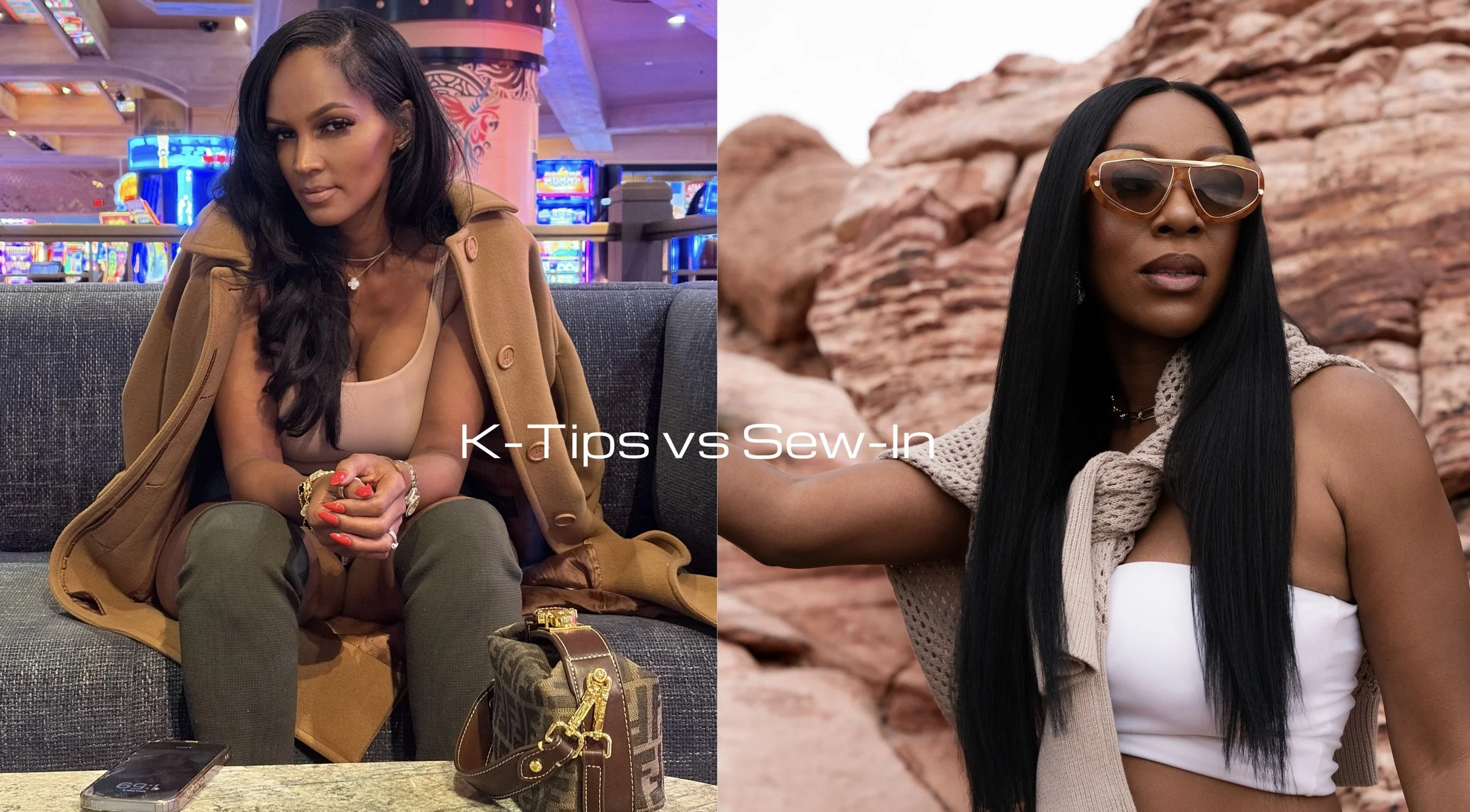
K-Tips vs. Sew-Ins
It All Begins Here
The Best Extension Is the One That Works With Your Hair, Not Against It.
Two Beloved Methods, One Important Question
If you've been researching hair extensions, you've likely come across two of the most popular installation methods: k-tip extensions and sew-in weaves. Both are beautiful, both can be incredibly protective — but they are not the same, and one may be significantly better for your specific hair type, lifestyle, and goals. Let's break it down together so you can make an informed, confident decision.
What Are K-Tip Extensions?
K-tip extensions (also called keratin bond or fusion extensions) are individual hair strands pre-tipped with a keratin bond at the top. A stylist uses a heating tool to melt and fuse the bond to small sections of your natural hair. The result is a seamless, strand-by-strand application that moves freely and looks incredibly natural. There is no weft, no braid foundation — just individual strands blended with your own.
Because they are applied individually, k-tips distribute weight evenly across the scalp. When properly installed with appropriate tension, they are gentle on the hair and scalp. They do not require tight braiding, which eliminates the traction stress that can be associated with sew-in installs. K-tips can be considered protective only when they are maintained under the care of a skilled professional. Regular maintenance appointments allow for scalp care and customized treatments to promote strong healthy hair for retention and length improvements.
What Are Sew-In Weaves?
A sew-in weave (also called a braid and sew or simply a weave) involves braiding the natural hair into a flat, cornrowed foundation and then sewing wefts of hair onto those braids using a needle and thread. The natural hair is completely tucked beneath the wefts, creating a full protective style.Sew-ins are fantastic for full coverage, adding serious volume and length, and protecting the natural hair by keeping it completely enclosed. They're also a versatile style — curly, straight, wavy, any look you want.
Protective Comparison: The Honest Truth
Both methods can be extremely protective or harmful depending on the skill of the installer, the quality of the hair, and how well the client maintains the style. That said, here are some key differences in their protective profiles:
K-tips: No tight braiding required, so there is less risk of traction alopecia along the hairline and scalp. Each bond is individually applied, allowing the scalp to breathe fully and the natural hair to receive moisture and care throughout the install period.
Sew-ins: The braid foundation must be done with the correct tension and pattern. Too tight, and you risk serious damage to the hairline and edges. Done correctly with a proper pattern, the hair underneath is fully protected from manipulation, heat, and breakage.
K-tips are generally better for women with finer or more fragile hair who need a lighter-weight, low-tension option. Looks and feels like your own hair. This method is not for women who want extreme volume, k-tips are designed to mimic your natural hair adding length and volume.
Sew-ins are often better for women wanting full coverage, a dramatic transformation, or those with hair that can handle the braid foundation and thrive.
Our Recommendation
There is no one-size-fits-all answer. The most protective extension is the one installed by a skilled, knowledgeable stylist using quality hair — and that is exactly what you'll find at Holistic Crowns. We take the time to assess your natural hair, your lifestyle, and your goals before recommending an installation method. Because your hair deserves a plan, not just a service.
Book a consultation with us and let's find the perfect protective strategy for your unique crown. ✨
Traditional K-Tips vs. Invisible K-Tips — What's the Difference and Are You a Candidate?
It All Begins Here
Not All Bonds Are Created Equal — Here's What You Need to Know
The Evolution of K-Tip Technology
K-tip extensions have been a beloved method for decades — and for good reason. They create a natural, seamless look that moves and behaves just like your own hair. But like all great things, they've evolved. Enter: invisible k-tips. If you haven't heard of them yet, you're about to become very interested. And if you're the right candidate, they might just change your hair life.
What Are Traditional K-Tips?
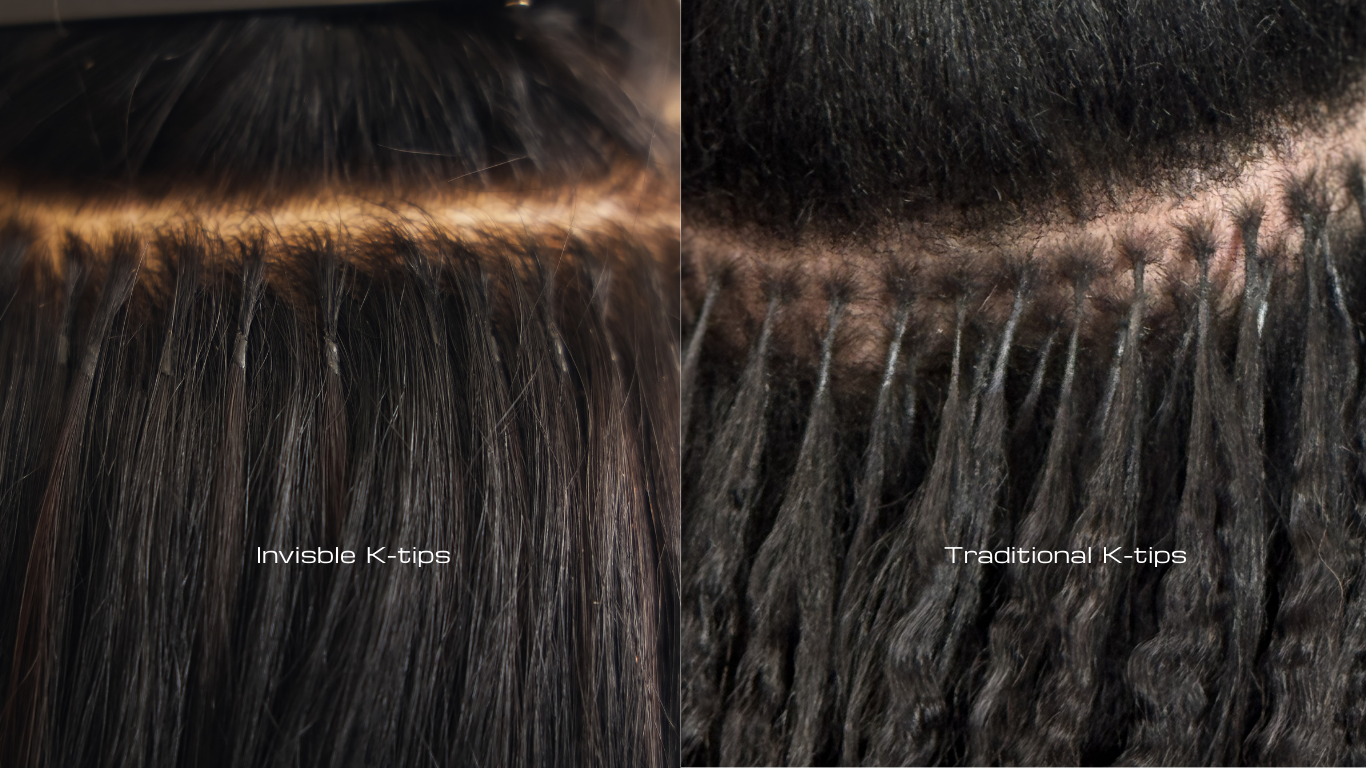
Traditional k-tip extensions typically do not have any of the client's hair out in between each bond— k-tip bonds are attached to a small section of your natural hair. Density is matched perfectly, so that there is no added tension and the bonds are comfortable on the first day. Bonds can rotate in a 360 motion. When the hair is worn down, the bonds are largely hidden within the body of the hair. Traditional k-tips are an excellent, time-tested method. They are durable, versatile, and work well on a range of hair types. For many women, especially 4b/4c textures, traditional k-tips are the perfect solution and they never look back.
What Are Invisible K-Tips?
Invisible k-tips feature tiny capsulated bonds that virtually disappear against the hair and scalp. Because the bonds are very small and have tiny pieces of clients hair out between the bonds, it doesn't draw the eye — even in high ponytails, updos, or when the hair is wet. The result is an installation that looks so natural, even people in the know may not realize you have extensions.
Invisible k-tips also tend to be slightly flatter in profile than traditional bonds, making them feel more lightweight and streamlined against the scalp. This style requires attention to detail installed by a professional. If not installed properly, invisible k-tips can be very damaging to your natural hair.
Are You a Candidate for Invisible K-Tips?
This is where we want to be very honest with you — because we believe in setting you up for success, not just giving you what sounds exciting. Invisible k-tips are not for everyone, and that's perfectly okay. Here's the ideal candidate profile:
You May Be a Great Candidate If...
You have medium to thick, strong natural hair. Invisible k-tips require a solid hair foundation to bond properly and withstand daily wear without slipping or causing stress on the natural strand.
You are already comfortable and in tune with your natural hair. This means you have a consistent hair care routine, you know what products work for you, and you understand how to handle your hair gently and with intention.one. Invisible k-tips require regular care — proper washing technique, the right products, and scheduled maintenance appointments every 4-6 weeks.
You understand that these extensions are an investment of both money and time — and you're ready to protect that investment.
❌ Invisible K-Tips May Not Be Right For You If...
Your natural hair is very fine, damaged, or fragile. The bond requires a strong attachment point, and fragile hair may not be able to support the extension strand without added stress.
You are new to extensions and don't yet have an established hair care routine. We love newcomers — but we'll often recommend starting with a more forgiving method and building up to invisible k-tips as your hair knowledge grows.
You are not yet comfortable managing your hair regularly and gently. These extensions reward consistency. Without it, they can slide, tangle, or cause more harm than good.
✨ The right extension method is the one your hair is truly ready for. Our job is to help you get there. ✨
At Holistic Crowns, we do a thorough hair assessment before any invisible k-tip installation. We want you to love your extensions — and we want your natural hair to thrive underneath them. That is always the goal.
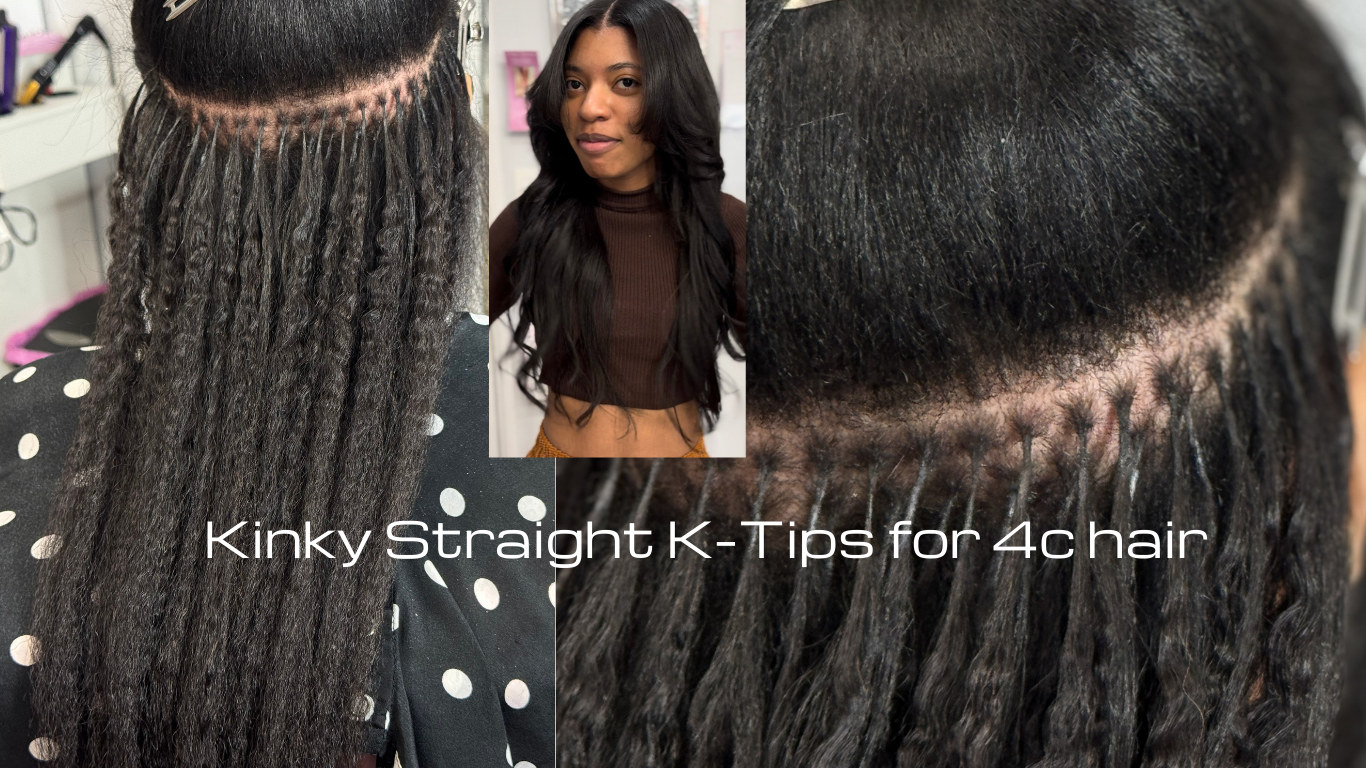
Why Matching Texture Is Everything in K-Tip Hair Extensions
It All Begins Here
When the Match Is Right, the Magic Happens.
The Most Overlooked Factor in a Flawless Install
When women think about choosing hair extensions, they typically focus on two things: length and color. And while both are absolutely important, there is a third factor that experienced extension specialists consider the most critical of all — texture. Getting the texture right is what separates a 'you can kind of tell' install from a 'how is her natural hair so perfect?' install. And when it comes to k-tips specifically, texture matching is everything.
What Do We Mean by Texture?
Hair texture refers to the wave pattern, density, and behavior of the hair strand. It encompasses whether hair is straight, wavy, curly, or coily — and every beautiful variation in between. It also includes how hair responds to humidity, how it holds a curl, how it behaves when wet, and how it moves throughout the day.
K-tip extensions are applied strand by strand, directly alongside your natural hair. Unlike a sew-in, where the extension hair sits on top of a braided foundation and can be somewhat independent from your natural hair, k-tips are completely integrated with it. They literally grow out of the same sections. This means any texture mismatch becomes immediately, undeniably visible.
What Happens When Texture Doesn't Match
Imagine wearing a silky straight k-tip extension alongside naturally coily or wavy hair. When the hair is styled straight, things might look okay. But the moment your natural hair begins to revert — in humidity, after a wash, after a workout — the difference becomes stark. Your natural coils emerge while your extensions stay pin-straight. Instead of a seamless blend, you have two completely different hair stories happening on the same head.
This is not just a cosmetic issue. Mismatched textures also create practical problems. Products that work for one texture may be wrong for another. Styling tools need to be set differently. The drying time, the shrinkage, the frizz response — everything is different. A mismatched install creates a daily battle between your natural hair and your extensions.
Why Proper Texture Matching Transforms the Install
When your extension hair matches your natural texture — truly matches it, not just approximately — the entire install changes. Your hair moves as one. It dries as one. It frizzes as one (yes, even that becomes consistent and manageable). Products work for everything at once. Styling is simple and intuitive. And most importantly, no one can tell where your hair ends and the extension begins.
This is the standard at Holistic Crowns. We don't do approximate matches. We take the time to analyze your natural texture, your curl pattern, your porosity, and your hair behavior before selecting or recommending extension hair. We source hair from multiple regions of Southeast Asia specifically because the range of textures available allows us to make precise, beautiful matches for a diverse range of clients.
The Texture Consultation Is Not Optional
When you come to us for k-tips, part of your appointment always includes a texture assessment. We look at your hair dry and wet. We observe how it responds to humidity. We ask about your daily routine. All of this information helps us recommend the exact hair that will integrate seamlessly with your natural hair and serve you beautifully for the duration of your install.
✨ Your extensions should never compete with your hair. They should complete it. ✨